


Report on the AI and Journalism public meeting
The BPM Public Meeting was held Sunday, 19 April 2026 at 4:30pm via Zoom.
This year, the subject ws AI: what it means for journalism, democracy, and transparency.
Panel speakers were:
- Dr Merja Myllylahti: Merja is an Associate Professor in Journalism and Critical Media Studies at AUT. She leads the trust in news project and is Co-Director at the AUT research centre for Journalism, Media and Democracy (JMAD). She conducts research into AI and digital journalism.
- Dr Andrew Lensen: Andrew is Programme Director for Artificial Intelligence at Te Herenga Waka - VUW. He received the Critic and Conscience of Society Award this year. He has also co-founded his own ethical AI consultancy, LensenMcGavin AI.
- Kyla Jade Blennerhassett: Kyla is the AI Lead for AUT's student newspaper, Te Waha Nui, and created their new AI Policy.
- Patrick Crewdson: Patrick is the Director of AI Strategy & Implementation at RNZ, and former Editor in Chief at Stuff NZ.

Video
The recording of the event is available here - https://youtu.be/i5JB0-fl7pk
Summary
And here’s a summary of what was said in the meeting:
---
BPM Public Meeting on AI impact on journalism, democracy and transparency
This year’s Better Public Media Public Meeting involved a panel of experts in the fields of AI and media. The meeting was open to the public, and anyone interested was encouraged to come. The experts spoke about the impact of AI in general on society and on media; the public’s perceptions about AI; and how to regulate and use AI ethically and responsibly. This panel was followed by a Q&A, during which the experts answered questions from people who attended the meeting.
The transcript for the meeting was summarised below using Recall AI (of course). Note this summary was edited and tidied up by a human. Links to the YouTube video are provided.
Patrick Crewdson, RNZ's Director of AI Strategy & Implementation, discussed RNZ's AI strategy, the core tensions RNZ faces, and the approach they are taking in a time of rapid change, uncertainty, and distrust for AI among New Zealanders.
According to an Ipsos AI Monitor survey, 67% of New Zealanders say products and services using AI make them nervous. This makes New Zealand the second most nervous country in the survey. Approximately 84% prefer human-driven content over AI-driven content for news articles or websites. - https://www.youtube.com/watch?v=i5JB0-fl7pk&t=400s
The AUT Trust in News in Aotearoa New Zealand survey found that 60% of respondents were uncomfortable with news produced mainly by AI with some human oversight. - https://www.youtube.com/watch?v=i5JB0-fl7pk&t=434s
RNZ's core values include building trust with audiences, and the organisation takes this seriously. In 2026, RNZ was the country's most trusted news brand in the AUT report. - https://www.youtube.com/watch?v=i5JB0-fl7pk&t=456s
The way news and information is created, distributed, discovered, and consumed is changing quickly and AI is a key driver of this change. RNZ must take this into consideration while also considering their audience's trust issues with AI adoption in news media. - https://www.youtube.com/watch?v=i5JB0-fl7pk&t=508s
The organisation recognises there are risks involved in either using AI irresponsibly or ignoring the new technology altogether, which could lead to a loss of audience appeal and being out-competed by other media outlets. RNZ taking a considered approach to set itself apart. - https://www.youtube.com/watch?v=i5JB0-fl7pk&t=593s
RNZ has published a set of principles for AI use. These include using AI to assist content creation; prioritising human talent and creativity; having human oversight; and being transparent about its AI approach and usage. - https://www.youtube.com/watch?v=i5JB0-fl7pk&t=683s
RNZ is approaching this issue cautiously and wants to focus on serving public interest first, rather than behaving like other media outlets that may be chasing profits by moving quickly and putting AI in everything. - https://www.youtube.com/watch?v=i5JB0-fl7pk&t=728s
They will continue to prioritise human talent and creativity, and will always have appropriate human oversight. - https://www.youtube.com/watch?v=i5JB0-fl7pk&t=756s
Kyla Jade Blennerhassett, student newspaper Te Waha Nui's AI Policy Lead
Kyla was the developer of the AI policy for Te Waha Nui and is a third-year journalism student at AUT. She is part of team that produces news for the student journalism news site, which focuses on creating ethical journalism and providing a unique voice from students in media. - https://www.youtube.com/watch?v=i5JB0-fl7pk&t=866s
The need for an AI policy arose at the beginning of the year, as there were no existing guidelines or regulations for using AI. Kyla was chosen to lead the effort after expressing interest in the project. - https://www.youtube.com/watch?v=i5JB0-fl7pk&t=906s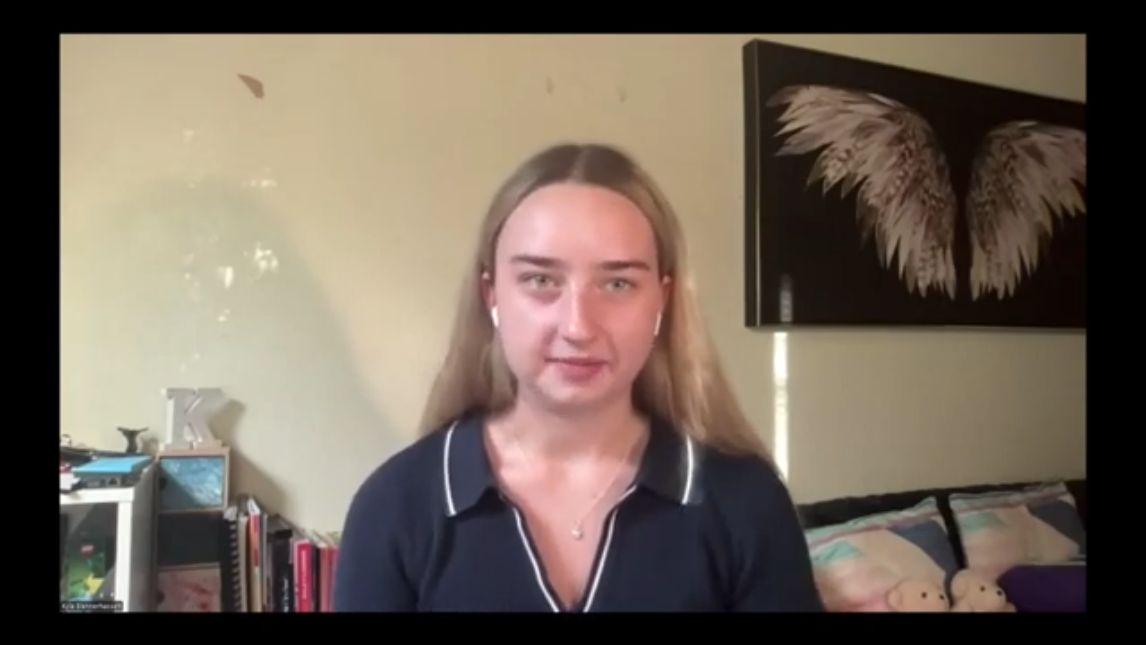
A major concern among students was that using AI to write stories would undermine their learning experience, as they are at university to learn how to write by themselves. Therefore, the AI policy aims to balance the use of AI with the development of journalistic skills. - https://www.youtube.com/watch?v=i5JB0-fl7pk&t=1008s
The AI policy focuses on using AI for transcription, translation, and research, and includes an AI disclaimer on every published story to ensure transparency and trust with readers. - https://www.youtube.com/watch?v=i5JB0-fl7pk&t=1101s
Kyla believes that by prioritising the development of journalistic skills such as writing, finding sources, and structuring stories, students will be better equipped to spot mistakes made by AI in the future, even if the use of AI in journalism becomes more prevalent. - https://www.youtube.com/watch?v=i5JB0-fl7pk&t=1077s
When writing a story, students find it helpful to note at the bottom whether AI was used. If AI is used (for example, to transcribe audio from an interview), it is essential to note that down so readers are informed. - https://www.youtube.com/watch?v=i5JB0-fl7pk&t=1160s
AI can also be used for translation, such as translating articles into Te Reo Māori, but someone fluent in the language will check over and ensure the translation is correct before publication. - https://www.youtube.com/watch?v=i5JB0-fl7pk&t=1231s
Dr. Andrew Lensen, Senior Lecturer in Artificial Intelligence, Victoria University of Wellington
Dr. Andrew Lensen believes that journalists should minimise their use of AI, as widespread use of AI in journalism could further erode the public’s already shaky trust in the industry. - https://www.youtube.com/watch?v=i5JB0-fl7pk&t=1541s
The potential lack of AI use in journalism could be an opportunity for traditional sources like RNZ to attract people back from social media, as people may prefer content that is not generated by AI. - https://www.youtube.com/watch?v=i5JB0-fl7pk&t=1586s 
Dr. Lensen has concerns around the use of AI, but it is possible that these issues will resolve themselves over time as people become more accustomed to the technology, similar to how the internet was initially received. - https://www.youtube.com/watch?v=i5JB0-fl7pk&t=1616s
Many young people have a deep concerns about how new technologies are imposed on them and their lack of choice in how they engage with the world. - https://www.youtube.com/watch?v=i5JB0-fl7pk&t=1675s
The rise of AI summaries and Google search results affects publishers, because it reduces the number of clicks on news websites, which in turn affects ad revenue and other forms of engagement. This raises questions about the commercial prospects of journalism in the future. - https://www.youtube.com/watch?v=i5JB0-fl7pk&t=1695s
Journalists who cover AI topics often do not have a deep understanding of the subject. AI is not part of their regular beat, and they may only cover AI-related topics when they intersect with their primary area of focus. - https://www.youtube.com/watch?v=i5JB0-fl7pk&t=1755s
There is concern about how AI will impact elections, as it can be used to influence people through social media with minimal spending. AI bots can be used to lobby or influence elections, which is a challenging issue that public media needs to address. - https://www.youtube.com/watch?v=i5JB0-fl7pk&t=1932s
The issue of AI-generated information accuracy is complex, and it is referred to as a "value verification paradox.” This means that the time and effort required to fact-check AI-generated information may outweigh AI’s benefits. Hallucinations or incorrect information are an inherent part of the technology. - https://www.youtube.com/watch?v=i5JB0-fl7pk&t=2106s
Using AI tools for writing may not be cost-effective for news organisations, because they still need to employ senior people to check the content, which can be expensive. - https://www.youtube.com/watch?v=i5JB0-fl7pk&t=2200s
It is essential to be cautious when evaluating the benefits of AI and not to overstate them. The value created by AI in monetary terms may not be significant. - https://www.youtube.com/watch?v=i5JB0-fl7pk&t=2218s
It is important to note that human sources of information can also be inaccurate and internet searches can lead to problems with inaccuracy, so it is essential to have realistic expectations when using AI. - https://www.youtube.com/watch?v=i5JB0-fl7pk&t=2248s
Dr Merja Myllylahti, Associate Professor in Journalism at the AUT - Students in the Te Waha Nui newsroom created their own AI policy, which was stricter than expected, demonstrating that the next generation of journalists may be more aware of the importance of transparency in AI-generated content. - https://www.youtube.com/watch?v=i5JB0-fl7pk&t=2333s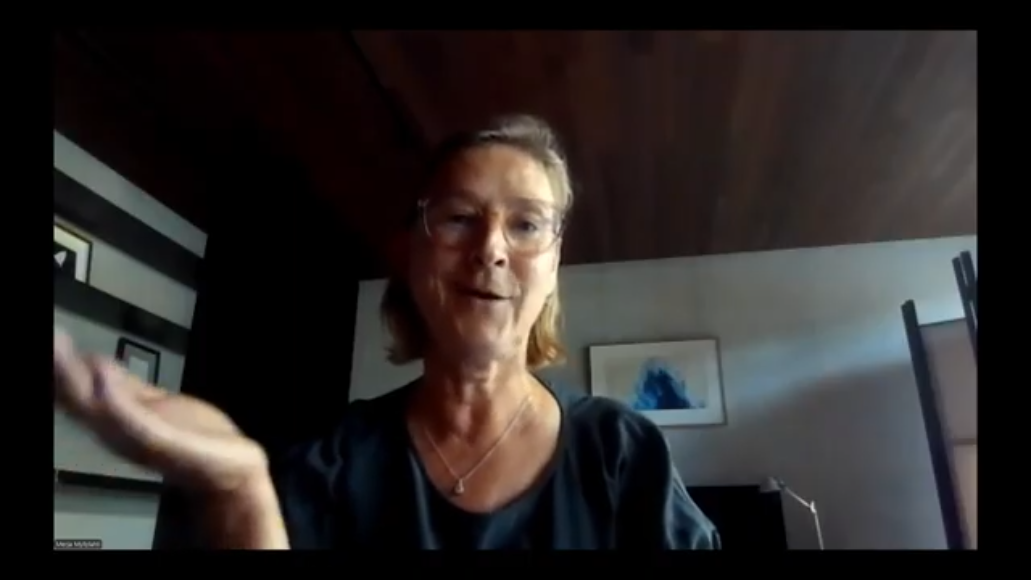
There is a significant age gap in the use of AI. Young people seem more comfortable with it, but in practice, this may not be entirely true, as approximately 12% of survey respondents in New Zealand use AI search assistant ChatGPT as a source of news. - https://www.youtube.com/watch?v=i5JB0-fl7pk&t=2443s
The use of AI as a source of news is not widespread, and only 4% of the survey respondents express concern about the difficulty of distinguishing between true and false information in the presence of AI-generated content. - https://www.youtube.com/watch?v=i5JB0-fl7pk&t=2463s
AI is used in New Zealand newsrooms for tasks such as transcription, summarising large documents, content moderation, and personalising content. Some newsrooms use AI tools to write and edit, including allowing AI to write the first draft of a news article. - https://www.youtube.com/watch?v=i5JB0-fl7pk&t=2537s
The importance of human oversight in AI use is highlighted by an example from Finland, where two major newspapers published a false story about origins of the drones that were shot down in the city of Kouvola. The story was later found to be incorrect, due to the lack of human oversight of an AI-generated headline. - https://www.youtube.com/watch?v=i5JB0-fl7pk&t=2636s
News editors have compared AI tools to Google, stating that they are just new tools, and it is crucial to be cautious and ensure that all journalistic principles and ethics are in place when using them. - https://www.youtube.com/watch?v=i5JB0-fl7pk&t=2799s
It is possible for journalists to decide not to use AI tools at all and still have a career in journalism, although it may be a risky career proposition. Being educated about AI and making deliberate decisions about AI use is essential. - https://www.youtube.com/watch?v=i5JB0-fl7pk&t=2833s
Patrick agrees with the importance of maintaining human critical thinking skills and advises that it is essential to stay "match fit" and not let skills atrophy, which is also relevant to other fields like software engineering. - https://www.youtube.com/watch?v=i5JB0-fl7pk&t=3010s
The increasing use of AI could lead to a reduction in the basic skill level of employees. It could cut out employment opportunities for a significant number of people, and this could also affect the media industry. - https://www.youtube.com/watch?v=i5JB0-fl7pk&t=3034s
General discussion
Geoffrey Hinton, known as the godfather of AI, has estimated that there is a 20% chance that AI could lead to human extinction within three decades, prompting questions about why such a risky technology is being permitted. This was generally noted by panelists to be highly unlikely. - https://www.youtube.com/watch?v=i5JB0-fl7pk&t=3074s
While some experts like Hinton have expressed concerns about the existential risks of AI, there is a diverse range of opinions among experts, and it is essential to consider multiple perspectives when evaluating these risks. - https://www.youtube.com/watch?v=i5JB0-fl7pk&t=3167s
Other concerns about AI include copyright and intellectual property issues; environmental impact; labour usage for training models; and concentration of ownership in the hands of a few billionaires. These issues require societal-level intervention. - https://www.youtube.com/watch?v=i5JB0-fl7pk&t=3274s
Some individuals, such as Elon Musk and Sam Altman, may be hyping up the existential risks of AI to distract from more immediate risks that need attention, and it is essential to give due attention to all layers of the issue. - https://www.youtube.com/watch?v=i5JB0-fl7pk&t=3295s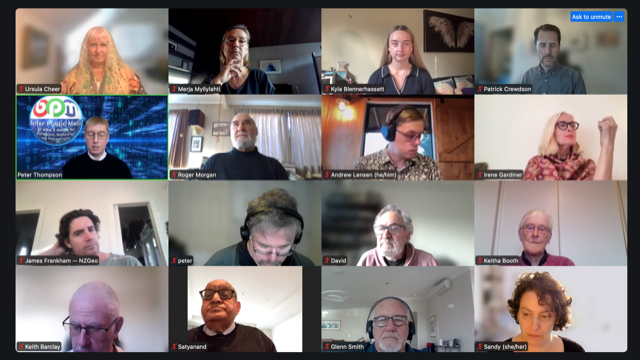
AI can be beneficial for tasks like analysing large amounts of data to identify trends or patterns, and some individuals find AI-powered transcription tools useful for quickly skimming and scanning through interviews and finding specific quotes. - https://www.youtube.com/watch?v=i5JB0-fl7pk&t=3483s
The use of AI for transcription can save time and increase efficiency, allowing users to quickly search for keywords and quotes, rather than having to listen to the entire recording multiple times. - https://www.youtube.com/watch?v=i5JB0-fl7pk&t=3503s
Media organisations such as RNZ, Stuff, TVNZ, and The NZ Herald, are considering or have already developed codes of practice and guidelines for the use of AI, including specific principles and guidelines for editorial operations. - https://www.youtube.com/watch?v=i5JB0-fl7pk&t=3711s
The European Broadcasting Union has developed a system called Eurovox, which uses AI to translate news from different countries into various languages, making it possible for news to be shared across Europe in a local language. The Eurovox system is not perfect and still requires human checkers to ensure the validity of translations, but it has the potential to create a pan-European news source with news from all over the continent available in local languages. https://www.youtube.com/watch?v=i5JB0-fl7pk&t=3892s
The use of AI in journalism can involve a mix of human and AI-curated content, as seen in the example of The NZ Herald, which selects some top stories by humans and curates the rest using AI. - https://www.youtube.com/watch?v=i5JB0-fl7pk&t=4023s
It is very important to ensure that AI serves humanity and does not destroy it. One possible solution proposed is the automatic watermarking of all AI-generated content to make it identifiable and filterable. - https://www.youtube.com/watch?v=i5JB0-fl7pk&t=4313s
The age old conundrum surrounding technology, where every new technology is seen as either beneficial or detrimental, is relevant to the discussion of AI, and panelists questioned whether AI presents a sufficiently different set of challenges that require more concern. - https://www.youtube.com/watch?v=i5JB0-fl7pk&t=4386s
The future of AI is unpredictable and includes possibilities such as agentic AI. This involves systems that can perform tasks autonomously over a longer time period, and advancements in video and image generation. The exact trajectory is uncertain due to the involvement of private sector companies. - https://www.youtube.com/watch?v=i5JB0-fl7pk&t=4456s
The discussion highlights the need for continued society-wide discussions to address the challenges and uncertainties surrounding AI. - https://www.youtube.com/watch?v=i5JB0-fl7pk&t=4511s